Our History
Equal Balance Co. – Industrias Integradas CTA – is more than a company:
it is a story of transformation, empowerment, and commitment to sustainable rural development.
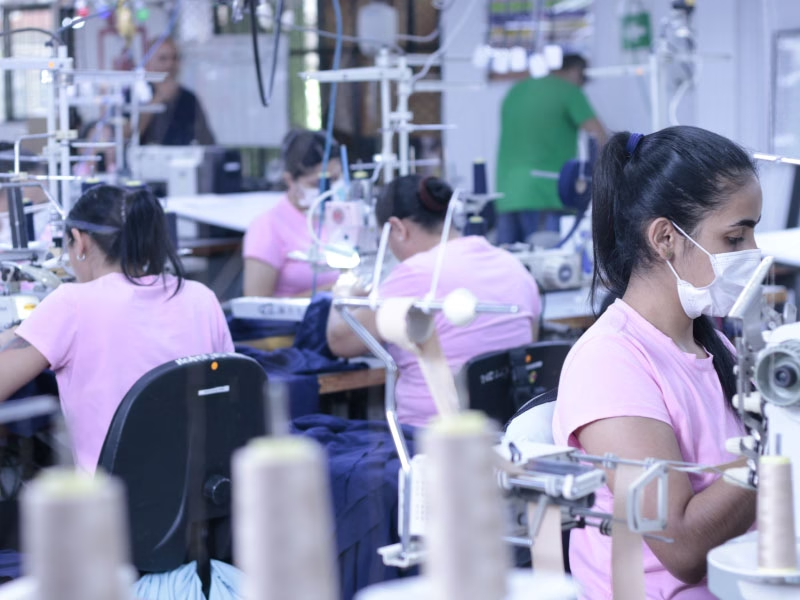
We are the reflection of community-driven work and the power of women in rural Colombia.
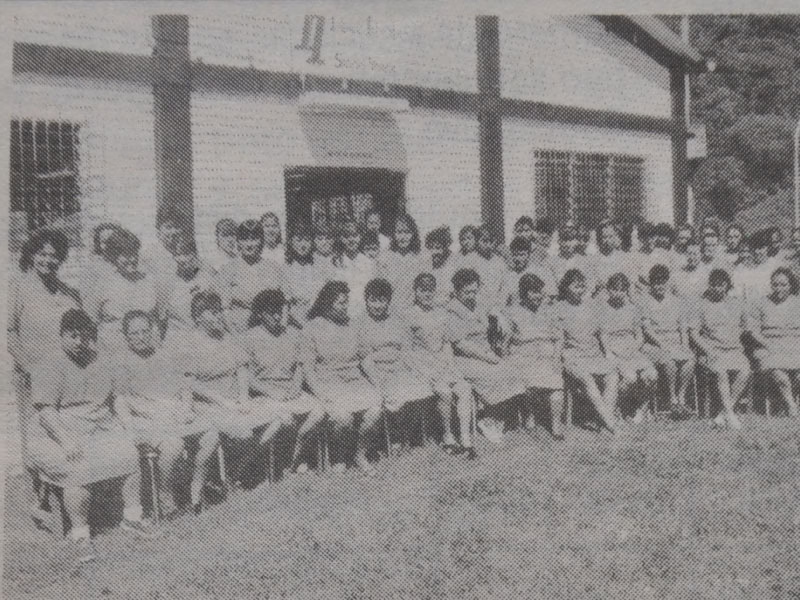
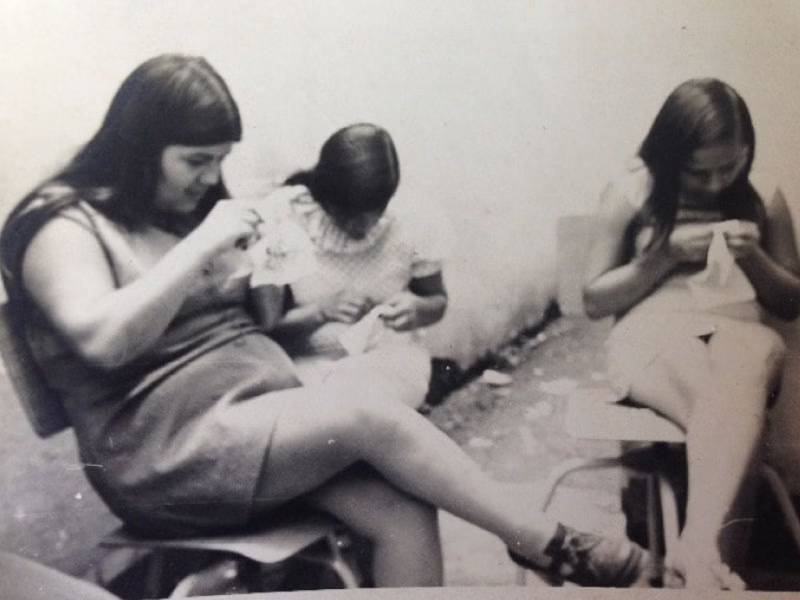
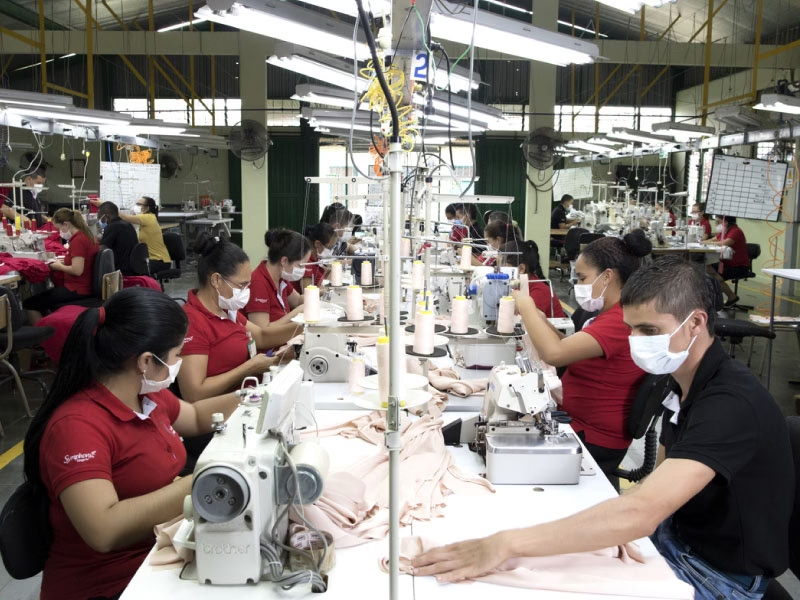
Equal Balance Co. – Industrias Integradas CTA – was founded through the commitment and determination of 113 rural women who, on September 14, 1974, founded the Venecia rural workshop, located in the district of Venecia, in the municipality of Trujillo, Valle del Cauca.
What began as a pre-cooperative group focused on garment embroidery was formally established on July 21, 1975, when it obtained its legal status.
This collective dream became possible thanks to the support of the Valle del Cauca Coffee Growers Committee, under the leadership of Dr. Óscar Jaramillo.
Dr. Óscar Jaramillo’s vision was clear: to help create a sustainable source of employment and well-being for rural women — especially the wives and daughters of coffee growers — by providing them with real opportunities for income generation and personal development.
From the very beginning, the cooperative has been guided by objectives that remain the foundation of our work today:
- Improve the quality of life of rural women.
- Provide comprehensive education in social, economic, and cooperative development.
- Diversify and strengthen the income of rural families.
- Prevent migration to cities by creating real opportunities within local communities.
- Serve as a school of leadership and self-management for our members.
- Promote active and conscious participation in cooperative life.
- Organize production and services based on solidarity-driven principles.
- Contribute to the growth of the cooperative movement in Colombia.
The organization is inspired by the purest cooperative principles, adapted to the specific circumstances of its members, and its primary purpose is to achieve the fullest human development of its members and their families, and to provide them with the highest possible levels of well-being, security, and progress within a community-based framework, through the application of cooperative standards, systems, and practices.
Text excerpted from the 1974 founding charter
+50 YEARS
Supporting the future and the dreams of hundreds of people by creating formal employment and stable income in rural communities across Valle del Cauca.
1974-1984
Foundation and Growth
1974
● On September 14, the pre-cooperative group Talleres Rurales del Valle Ltda. is founded in the rural district of Venecia, Trujillo, Valle del Cauca.
● Establishment of the San Antonio–Sevilla facility in Valle del Cauca.
1976
● Establishment of seven additional facilities in rural areas of Valle del Cauca: Dagua, Salónica, Versalles, La Tulia, La Marina, El Villar, and Pueblo Tapao.
1984
● Consolidation of 482 cooperative members.
1975
● Establishment of the facility in the municipality of Ulloa, Valle del Cauca.
1979
● Establishment of the Potrerillo facility in the municipality of Palmira, Valle del Cauca.
1990
● Name change to Industrias Integradas Cooperativa Talleres Rurales del Valle Ltda.
1994
● Start of the conversion of footwear production plants into apparel manufacturing facilities.
● Entry into the U.S. export market.
● Consolidation of 610 cooperative members.
1985-1994
Stabilization
1987
● Establishment of the Sevilla facility.
1993
● Establishment of the Argelia and Caicedonia facilities in Valle del Cauca. With these additions, the cooperative reached a total of 12 production facilities.
1995- 2004
Diversification and Expansion
1995
● Launch of the cooperative’s own women’s intimate apparel brand, Symphony Lingerie, for the domestic market.
2004
● Consolidation of 807 cooperative members.
2000
● Completion of the conversion of footwear production facilities into export-oriented apparel manufacturing plants.
● Consolidation of seven production facilities focused on export markets.
2008
● Slowdown of the domestic market.
● Corporate name changes to Industrias Integradas Talleres Rurales del Valle – Worker Cooperative (CTA).
● Expansion into full-package apparel manufacturing with partners such as Tania and Vicky Form (Mexico), VanRalte (Venezuela), and Macho (Spain).
2010
● Implementation of Lean Manufacturing methodology.
● Definition of a value proposition focused on strengthening long-term client relationships.
2005- 2014
Crisis and Reorganization
2005
● Decline in export demand to the United States due to the opening of U.S. trade quotas to China.
● Crisis of the CTA cooperative model, including the distortion of cooperative principles and the stigmatization of the model (2005–2008).
2009
● Consolidation of operations into six production facilities.
2011
● Strengthening of the cooperative management model.
2015- 2025
Recovery and Consolidation
2016
● Consolidation of financial performance indicators and strengthening of the cooperative management model.
2019
● Client portfolio diversification plan for contract manufacturing at each production facility.
2025
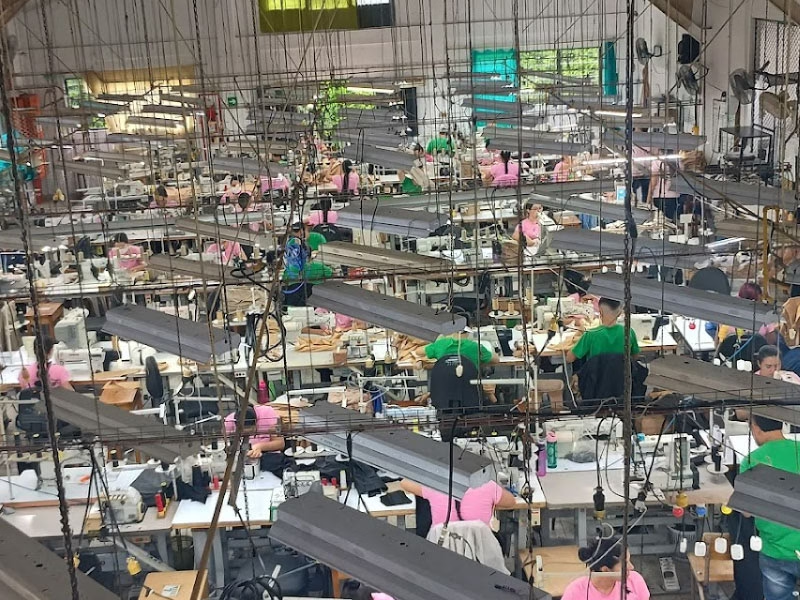
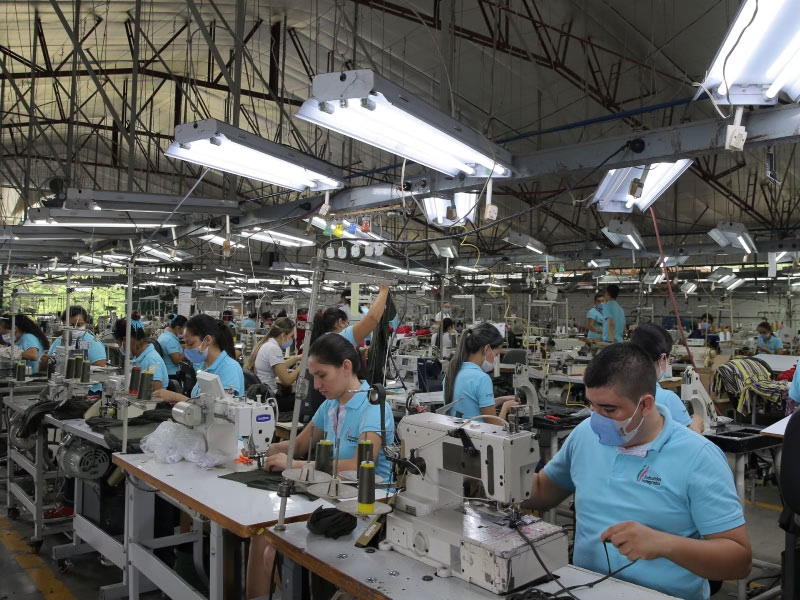
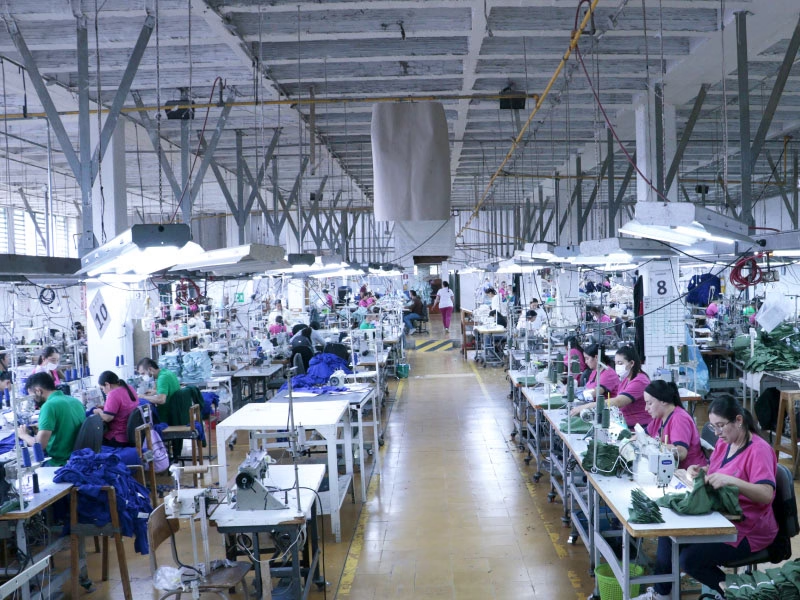
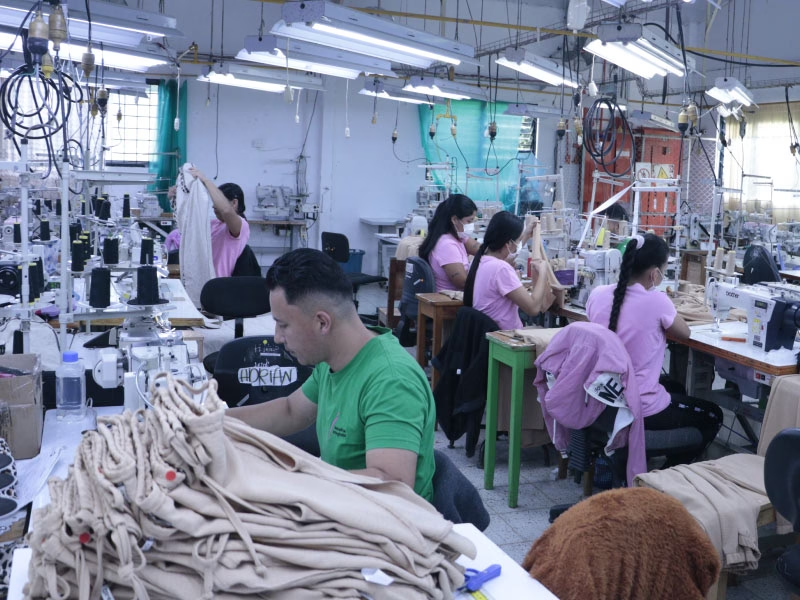
● Today, the cooperative brings together more than 400 members across five production facilities located in Valle del Cauca, along with an administrative headquarters in the city of Cali.
● Creation of the Equal Balance Co. brand and launch of new digital tools to facilitate communication with domestic and international markets.
2018
● Design and implementation of a human-centered management model.
2024
● Design and implementation of a strategic plan to expand participation in international markets.